Our tour
Group day with lunch
Trek or cable car both ways
- Trek2.5 km
- Cave at11:00
- Reviews325
Guides
Language
Currency
See open datesstarts at $53 · cancel freeGroup price check
Side-by-side: 3 options
Set your party and see what these cave tours cost.
≈
View≈
View≈
ViewThese from-prices come from GetYourGuide and are converted using the ECB reference rate; the exact price shows at checkout.
The cave is the holiest place in the complex and the goal of the climb. Here is how you reach it, what the stairs inside are like, how pilgrims use it and how to behave.
Editorial team, perfumepagodatour.top · Updated November 16, 2026 · Read in 8 min
Quick look
Huong Tich cave of the Perfume Pagoda is its most sacred part, and the rest of the complex is in a sense the road leading to it. The Vietnam News Agency says it is dedicated to Avalokitesvara and bears the title Nam Thien de nhat dong, which it renders as the finest cave in Vietnam.1 Inside the cave stands the Huong Pagoda itself, and the complex around it dates from the late 17th century.5 Anyone looking for the Perfume Pagoda cave temple in Vietnam is looking for this cave, and the stairs, boats and pagodas on the way are its approach.
The compliment in the praise has a date. The cavern carries a note left by Lord Trinh Sam in 1770, ranking it first among the caves of the country.6 The 2025 festival reporting repeats that line and treats the carved inscription as a highlight of the complex.7 It matters for visitors because the inscription is old, carved in stone and part of what the committee asks everyone to protect.8 A pilgrimage here is therefore also a small visit to a historic document.
For the believers who climb here, the story is of a woman who practiced Buddhism in the cave. The Government portal dedicates the festival to Princess Dieu Thien, a figure who followed the Buddhist path in this very cave.9 Voice of Vietnam ties the pagoda to Quan Am, the Vietnamese name of the bodhisattva Avalokiteshvara.10 Both accounts sit side by side in official reporting, and neither needs to be set against the other to enjoy a quiet morning among the rocks.
How sources describe the climb
| Measure | What the source says | Source |
|---|---|---|
| Altitude | 390 m2 | Government portal |
| Steps down | 120 stairs from the entrance3 | VNA |
| Distance from Giai Oan | About 4 km14 | Government portal |
| Trek to the cave | 2.5 km | Our tour record |
| Walk back down | 1 hour | Private or small-group tour |
| Inscription | Dated 17706 | VNA |
The 4 km and 2.5 km figures measure different stretches and the sources do not say where each begins.14
There are different ways up. Huong Tich Cave and the Inner Pagoda are reached by stairs from the landing, and a cable car service is the other choice, so the Perfume Pagoda and Huong Tich cave can be combined in one morning.4 The Government portal's chain of highlights starts at the wharf, takes in Trinh Temple, Thien Tru, Giai Oan and ends at the cave, so the climb begins only after the boat and the first pagodas.13 The stairs are the traditional way, and nothing requires you to choose them.
Tour records give the climb in kilometers and hours. On our group tour the walk up to the main cave on the summit is 2.5 km, with a cable car both ways as the alternative. The tour capped at 12 guests also lists 2.5 km, setting off at 11:30. A private or small-group tour allows a trek of 1 hour back down, or the cable car instead. A government report, measuring from a different point, puts the cave about 4 km from Giai Oan Pagoda.14
The practical meaning is that the cave is a half-morning commitment either way. Boats run from 4.30am until 8pm in the festival season, so there is no tight cut-off on the water, but the cave sits at a height of 390 m and the stone steps take time.15,2 With older relatives or small children in the party, choosing a tour that lists the cable car as an option removes the main source of worry, and the first aid stations at the cave and the cable car stations are a reassurance.16
Tours that take you to the cave
Review counts of listings that visit the cave, as the scraped listing records give them.
The entrance is where most visitors stop for a photograph. VNA compares it to the mouth of a giant dragon and adds that a further 120 stairs descend to the cave.3 The same source describes stalactites and stalagmites of various sizes and shapes, and calls the whole an impressive natural masterpiece for those who come to admire the landscape and pray there.19 The descent is a procession in itself, and on busy days people move slowly in both directions.
A line from a government tourism page sums up the idea of the place: devotees make a wish for the year ahead in the sacred cave, and the prayer said there is central to the festival.20,21 The visitor who comes outside the festival months will find the same cave without the crowd, because the national tourism site says Huong Pagoda can be visited at any time of year.22 Only the boat and ticket arrangements around it change with the festival.
We found no official source that states the lighting, the temperature inside or the condition of the floor, so none is claimed here. The sensible assumption for any cave with steps that many people use is that stone can be damp and worn, which is a good reason to wear shoes with grip and to hold the rail where there is one. The pilgrims' reverence for the site also argues against rushing, and a slow descent leaves time to look at the rock rather than only at the next step.
Pick your climb
Answer honestly about your legs and the day, and the way up follows.
If I am fit and want the pilgrim's way
Climb the stairs
VNA says climbing the stairs expresses sincerity and respect.4
If I am with children or older relatives
Take the cable car
A cable car service exists beside the stairs.4
If I want to avoid queues
Go early or off season
The first days of 2026 brought 51,190 visitors in one day.17
If I want a long cave visit
Pick a tour with time
Itineraries place the cave between the boat and lunch.
If I want to photograph carvings
Ask your guide first
Visitors should ask before photographing people.18
Tours that reach the cave
Our tour
Trek or cable car both ways
Smaller party
Cable car instead of the walk
Guide languages
Hike or optional cable car
The cave is part of a living practice, not a museum. Prayers for peace run through the season, and the program also holds the Thuong Nguyen rite, the first-month Full Moon Festival and a birthday rite for Avalokiteshvara.25 Incense and fruit are offered at the festival, along with prayers for a prosperous new year.26 The cave is where those wishes are said, so expect incense smoke, murmured prayer and people who have come a long way.
The festival itself pays homage to Princess Dieu Thien, and her legend credits her with shielding her family from harm and defending the country in wartime.9,27 Once the rites end, the valley turns festive, with a rice-cooking contest, tug of war, boat racing and singing, mostly down on the valley floor.28 The cave stays the quiet center while the festive side happens around the stream, which is why a visit can feel calm even in a crowded month.
The cave also carries the weight of recent history. Fighting in 1947 left the pagoda largely in ruins, and the shrine visitors enter dates from the rebuilding of 1988, a later phase of a much older site.11 The cave temples of the complex were mostly built in the 17th century, which makes it one of the most significant temple complexes in the country.29 Our page on the history and legend of the complex tells the longer story, and this page sticks to the cave.
The cave over time
Late 17th century
The Huong Pagoda was built inside Huong Tich Cave.5
1770
He had a note carved praising the cave as the most beautiful in the country.6
1947
War with the French left the pagoda largely in ruins.11
1988
The pagoda was rebuilt after the war.11
2025
Hanoi designated the Huong Son complex a municipal-level tourist area.12
The national tourism site's advice for temples applies in full here: dress modestly and take your shoes and hat off before going in, though you may carry the shoes.23 The tour record for one private or small-group day adds that long clothes are required in the temple, and that hiking boots, a hat or an umbrella, sunscreen, sunglasses and cash are worth bringing. Together these point to a cave visit that needs both modest dress and shoes strong enough for stairs, so choose layers rather than shorts.
On photography the same tourism site asks visitors to respect privacy and ask before lifting a camera to photograph people.18 Pilgrims praying in the cave are people first and subjects second, so photograph the rock and the architecture instead and keep the lens away from faces. No official source we found lists a ban or a permit for photographs inside the cave, so follow what signs and your guide say on the day.
The committee that runs the festival asks residents and visitors alike for civilised conduct, to help preserve the heritage and to protect historical inscriptions and artifacts.8 That covers the carving of 1770 and any other stone with writing on it, so keep your hands off the walls.6 Leave no rubbish, keep your voice low and let people pass on the stairs. Our guide on what to wear and bring covers clothing in more detail, with a checklist you can tick off the evening before.
Video
YanzoDaDon on YouTube · The video waits until you tap play to load.
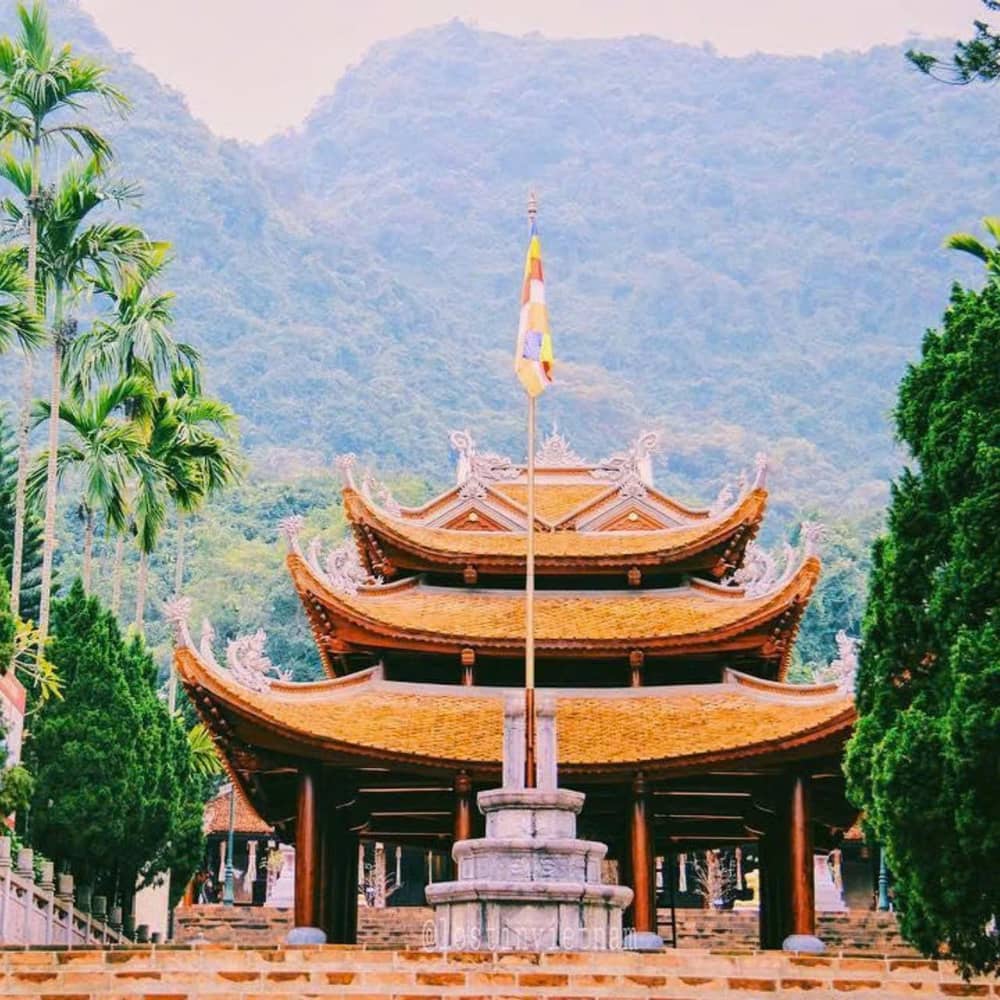
Dedicated to Avalokitesvara, Huong Tich Cave is praised as “Nam Thien de nhat dong”, which means the most beautiful cave in Vietnam.
For the cave
On a group tour the cave sits in the middle of the day. Our tour sets the trek or cable car at 11:00 after the boat, with lunch at 12:00 and the Thien Tru Pagoda at 2:00. The small-group tour starts its trek at 11:30 and lunches at 13:00. That leaves little time between the start of the trek and lunch, enough for the climb and the cave if the group moves steadily, but not for a long stay or a second look at the Giai Oan stream.
Crowds change the picture. During the opening days of the new lunar year in 2026 the site welcomed 135,895 visitors, and on the fifth day alone 51,190 were recorded.24,17 The 2024 festival counted 30,000 visitors on its opening day.30 On days like these the stairs fill and queues at the cable car lengthen, so an early start is useful. Outside the festival months the same climb is quieter, and lotus and water lily months add reasons to visit later in the year.31
Planning around the cave means planning around energy. The boat ride, the stairs and the descent add up to a full day, and tour records give a pickup around 8:30 AM and a drop-off around 6:00 PM on one of them. Eat at the restaurant stop rather than before the climb, drink water on the way up and keep a little cash for the offerings that pilgrims make. The reward is a cave that feels far from the road, where many people come to pray quietly for the year ahead.
FAQ
It is dedicated to Avalokitesvara and praised as the most beautiful cave in Vietnam.1
The Government portal gives an altitude of 390 m for the cave.2
The entrance is like a dragon's mouth, and visitors go down 120 stairs to reach the cave.3
A cable car service is available, and our tour offers it for the trip up and down.4
Both our tour and the small-group tour list 2.5 km for the trek, the same on each record.
The national tourism site asks visitors to dress modestly and to remove shoes and hat at the doors of temples.23
Sources
Planning a day at the Perfume Pagoda from Hanoi? Ask a real person here.