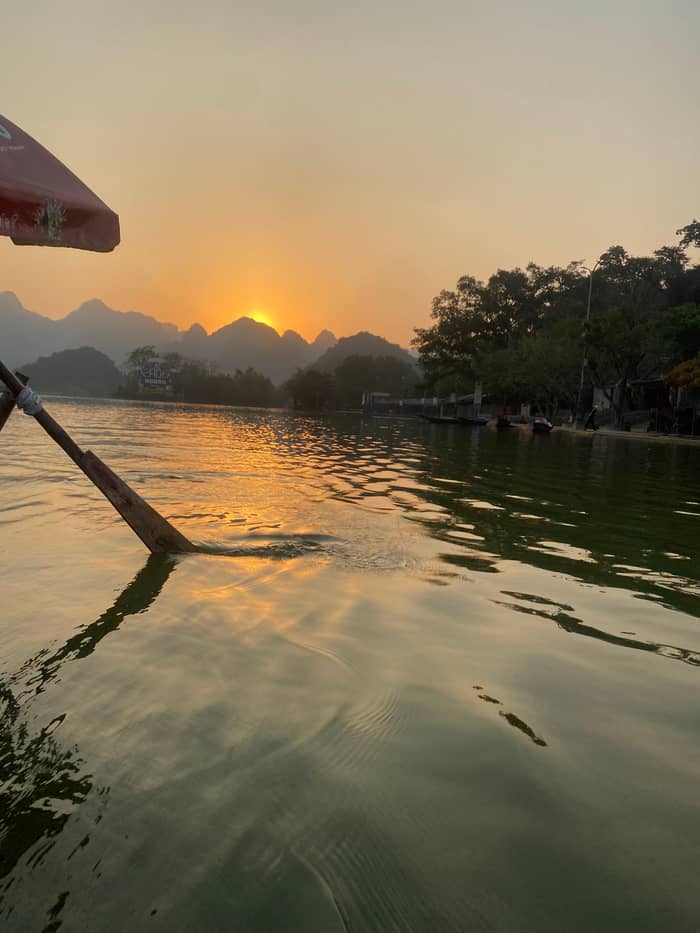
Our tour
Group day with lunch
Guide in English or Vietnamese
- Thien Tru2:00
- Duration12 hours
- Reviews325
Guides
Language
Currency
See open datesstarts at $53 · cancel freeGroup price check
Side-by-side: 3 options
Set your party and see what these guided days cost.
≈
View≈
View≈
ViewThese from-prices come from GetYourGuide and are converted using the ECB reference rate; the exact price shows at checkout.
The Perfume Pagoda of Huong Son is a pilgrimage place with a legend, a war-time loss and a rebuild. Here is what official sources say about its past, where they disagree and why the festival still matters.
Editorial team, perfumepagodatour.top · Updated November 16, 2026 · Read in 8 min
Quick look
The Perfume Pagoda is the everyday name for Huong Son, a landscape of limestone hills, a stream and a long list of religious sites. The Government's online newspaper explains that Huong Pagoda is only a colloquial name for the entire scenic area, a big cultural and religious complex of pagodas, shrines and temples.1 Vietnamese visitors regard the journey as a pilgrimage to the land of Buddha, where Avalokitesvara is believed to have led a religious life.8 The place is therefore more than scenery, and the history behind it is a religious one first.
Its legal status is an official one. The Vietnam News Agency dates the special national relic recognition of Huong Son to 2018, while the Voice of Vietnam gives December 2017.2,9 The dates differ, so this page says only that the complex has the highest national relic rank and leaves the year to the official decision itself. In 2025 the city of Hanoi added a second layer, designating it a municipal-level tourist area in the year the festival ran from February 3 to May 1.10
That status shapes what a visitor sees. The same relic sits in a working religious community, with a head monk who takes part in the opening, boatmen who sign service commitments and rules that ask visitors to protect inscriptions and artifacts.11,12 A reader looking for a short summary of the history of the Perfume Pagoda in Vietnam should hold on to that point: the buildings are rebuilt and the pilgrimage is the continuous thing, a custom that runs from the Le and Trinh era to the present day.13
A numbers table
| Item | Figure | Source |
|---|---|---|
| Complex area | 4,940 hectares26 | Hanoi city report, VNA |
| Sites in the complex | 21 pagodas, temples, shrines and caves26 | Hanoi city report, VNA |
| Thien Tru built | 16865 | VNA |
| Pagoda rebuilt | 19886 | Government portal |
| Festival length | 3 months27 | Government portal |
| Visitors a year | 2 million28 | Voice of Vietnam |
The area and site count come from the city's tourist-destination decision; the visitor figure is an undated Voice of Vietnam statement.26,28
The festival is built around a legend. At the heart of the event, the Government portal places Princess Dieu Thien, an enlightened being, who followed the Buddhist path in Huong Tich Cave.3 Tradition says that she shielded her family from evil forces and guarded the country in wartime, which gives the pilgrimage a patriotic as well as a devotional tone.18 Searches for a Perfume Pagoda legend usually lead to this figure, and the cave is the place where the story is said to have happened.
The legend sits beside a second figure. A VNA report presents the trip as a spiritual visit to a Buddhist land, home to the Goddess of Mercy and her religious life, while a Voice of Vietnam item connects the place to the bodhisattva Avalokiteshvara, called Quan Am by the Vietnamese.19,20 The festival also blends the Buddhist rites with older customs, since people honor their ancestors, revere Mother Nature and worship the Goddess of the Mountains.21
We have not found an official source that dates the legend or ties the princess to a particular century, so no date is given here. What the sources do allow us to say is that the festival's inception traces back to the Le-Trinh dynasty, a period of several centuries that the portal does not date more closely.13 Leave the exact origin of the story to the historians and enjoy it as pilgrims tell it. The Government portal also records that the pilgrim's day starts with offerings of incense, fruit and prayers for a prosperous new year.22
The dates in official reporting do not all match, which is normal for a site that was damaged and rebuilt. A Vietnam News Agency report says the Huong Pagoda complex was built in the late 17th century and that most of its cave temples date from the 17th century as well.4,14 The People's Public Security newspaper says instead that the complex was built in the reign of King Le Thanh Tong, who ruled from 1442 to 1497, and then destroyed by the French.30 This page treats the 17th-century date as the better supported by the cave temples and notes the other.4,30
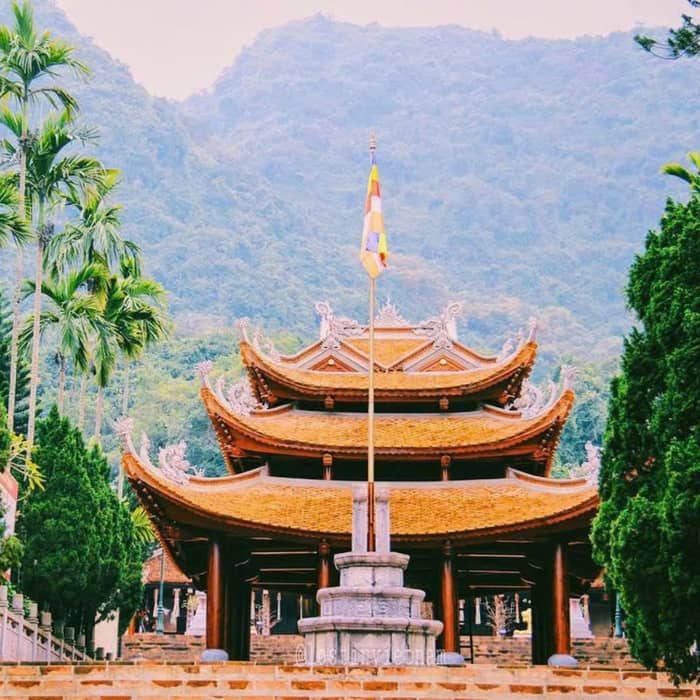
Thien Tru Pagoda has the clearest record. Its walls rose in 1686 and fell in 1945, when only the Thien Thuy and Vien Cong towers survived, and a smaller replica of the original was reconstructed in 1988.5,17 The wider pagoda inside the cave was heavily destroyed by the war with the French in 1947, and a rebuild followed in 1988.6 Lord Trinh Sam added his own mark in 1770, with a carved note that ranks Huong Tich Cave first among the caves of the country.16
The rebuilt state is why the complex looks newer than its history. Tour records call Thien Tru the Heaven Kitchen pagoda and give it a visit of its own on the afternoon of the group day. Reading the dates side by side, the war years of 1945 and 1947 mark the break between the older shrines and the ones pilgrims enter now.17,6 The 1988 date appears for both the cave pagoda and Thien Tru, so it is a safe point of reference.6,17
Which story first
Tell us what draws you and the part of the story to read first follows.
If I want the legend
Princess Dieu Thien
The festival honors her as a practitioner in the cave.3
If I want the dates
The Thien Tru record
If I want the war story
1947 and the rebuild
The pagoda was mostly destroyed in 1947 and rebuilt in 1988.6
If I want the living tradition
The festival
It runs for 3 months and is the longest of the year.27
If I want what to see on the day
The map page
The route runs from the wharf through Giai Oan to the cave.29
Ways to meet the history
Our tour
Guide in English or Vietnamese
Smaller party
English-speaking guide
More languages
Guide in 7 languages
The Perfume Pagoda pilgrimage is where the history becomes visible. By custom the season opens in the first lunar month, on what was once the day the forest was opened, and closes at the end of the third lunar month.31 The Government portal calls it the longest festival of the year in the country, lasting 3 months and bringing northerners together for the spring pilgrimage.27 Official dates move each year with the lunar calendar, and in 2026 it spanned February 18 to May 11.7
Part of the festival is ritual and part is play. The ritual side includes prayers for peace, the Thuong Nguyen ceremony, the first-month Full Moon Festival and the birthday ceremony of Avalokiteshvara.32 The lively side has folk games, from a rice-cooking contest to tug of war, together with boat racing, mountain climbing, cheo opera and hat van spiritual singing.33 A Voice of Vietnam report adds the mediumship ritual and the paddled boat ride to the practices that meet here.34
The tradition has proven resilient. The festival was suspended during the pandemic and held again in 2023 after 2 years of suspension, with the opening ceremony at Thien Tru Pagoda on January 27.35,36 The first five days of the 2026 Lunar New Year alone brought 135,895 visitors to the site, an increase of 138% over the year before.25 Those figures show how strongly the custom has returned, and they set the scene for the crowds a first-time visitor should expect in spring.
The long view
Late 17th century
The complex was built, with most cave temples from the same century.4,14
1686
The Outer Pagoda was built, and it hosts the festival opening.5,15
1770
His carved verdict ranked the cave first in the land.16
1947
The pagoda was mostly destroyed in the war against the French.6
1988
The pagoda, and Thien Tru Pagoda as a smaller copy, were rebuilt.6,17
2026
Pilgrims were welcomed from February 18 to May 11 under a safety and service theme.7
Beyond the spring festival, the site has a modern role. One Voice of Vietnam report said the complex welcomes 2 million visitors a year, and that tourism brings in 500 billion VND, which is 65% of the commune's total GDP.28,37 The commune chairman said in 2026 that Huong Son aims to become a hub for cultural and spiritual tourism operating 365 days a year.38 These figures describe the weight that the pilgrimage carries for the local economy.
The off-season has its own calendar. Tourism in Huong Son also runs in other seasons, with bombax flowers in March and April, lotus in August and September and water lilies in October.39 The same report puts Huong Pagoda halfway along a heritage trail of 100 km in the north, which links Thang Long, Trang An, Hoa Lu, Bai Dinh and Tam Chuc.40 The trail idea is a reminder that Huong Son is one of several Buddhist and historical places within reach of the capital.
For a day visitor the history is easy to read once you know the order. The boat passes Trinh Temple, lands at Thien Tru Pagoda, and the path climbs through Giai Oan to the cave.29 Our group tour spends the morning on the stream and the cave and visits Thien Tru Pagoda at 2:00 after lunch. A guide helps connect the stops with the legends, and reading this page beforehand lets you ask better questions, whether about the princess, the rebuilding or the festival.
Video
Hanoi Old Quarter Uncovered on YouTube · The video waits until you tap play to load.
The festival pays homage to Princess Dieu Thien, an enlightened being who practiced Buddhism in Huong Tich Cave.
Reading the site
A careful reader will see that the sources differ on several points. The year of the special-relic recognition is given as 2018 by VNA and by the People's Public Security newspaper, and as December 2017 by Voice of Vietnam, and the construction of the complex is placed in the late 17th century by one source and under King Le Thanh Tong by another.2,41,9,4,30 The distance to Hanoi is about 65 km in one report and about 70 km on the national tourism site.42,43 None of the differences changes how you visit.
These conflicts are typical for places with both written history and oral tradition. The legend is told by pilgrims and the dates are carried by officials, and both are collected by different people for different purposes. A good rule is to trust a date more when it is attached to a specific building and an event, such as Thien Tru in 1686 and 1945, than when it is attached to a whole complex.5,17 That is the rule this page follows.
If you want to go deeper, the best material is on the ground. Guides at the wharf and the pagodas know the local story of each shrine. Ask your guide which legend is told at which stop, since Trinh Temple and Giai Oan each have their own account.44,45 Our map page shows where each of these stops sits in relation to the others, and the cave page explains the climb to the oldest shrine. Reading both before you go makes the places easier to place in the story, and a guide's commentary easier to follow once you stand there.
FAQ
The pagoda was mostly destroyed in the war against the French in 1947 and rebuilt in 1988.6
The season opens in the first lunar month and closes in the third.31
A Voice of Vietnam report links the pagoda with the worship of Avalokiteshvara, known as Quan Am.20
Sources
Planning a day at the Perfume Pagoda from Hanoi? Ask a real person here.